
The short answer: there is no single timeframe
The Association of Professional Piercers notes that even a healed piercing can begin to shrink or close within minutes, even after years. This describes a possibility, not a countdown: the rate varies widely and cannot predict when an individual channel will close completely. Healing times also vary by location, but they are not the same as closure time after jewellery is removed.
It is therefore not possible to estimate how long jewellery will still pass through your piercing or to apply someone else’s experience to you.
Why closure time cannot be predicted
Healing varies by location and person. This does not make it possible to calculate when a hole will shrink after jewellery is removed: even a mature piercing can change quickly, but there is no deadline that applies to everyone.
The age of a piercing alone therefore cannot be used to calculate a timeframe. A visible opening does not confirm that the channel is clear or that jewellery can be reinserted easily.
If you want to keep the piercing open
Even a healed piercing can shrink in a short time; this varies from person to person, and there is no safe length of time to leave it without jewellery. If you want to keep it open, ask a qualified piercer for advice as soon as you can rather than experimenting with reinsertion.
What appearance alone cannot tell you
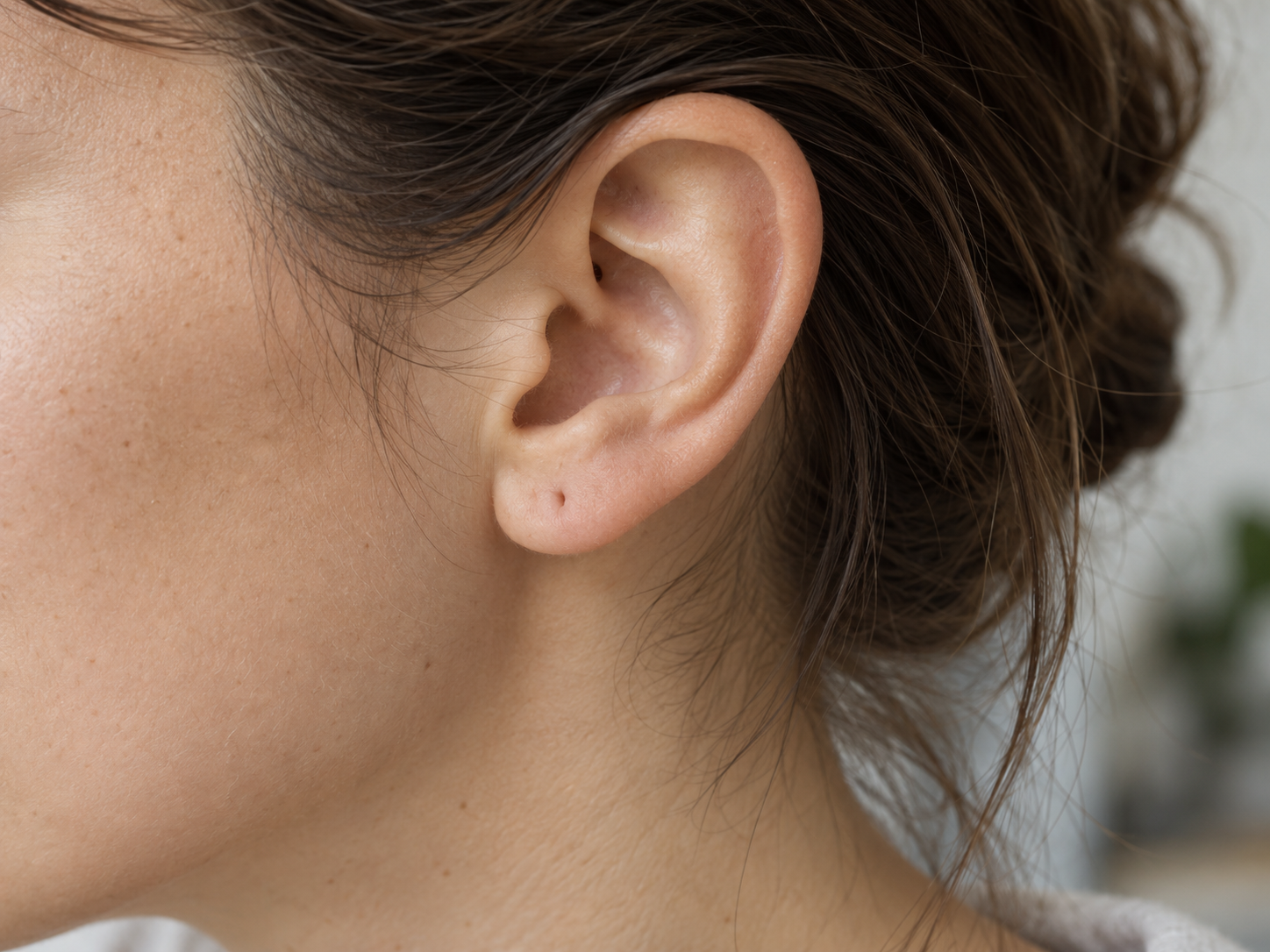
The sources consulted do not specifically describe whether, or what kind of external mark, may remain after a piercing closes. Consequently, neither the appearance of the skin nor a visible opening alone can estimate how long jewellery will still pass through the channel or whether jewellery can be reinserted.
If a mark or change in the area concerns you, seek medical assessment, particularly if you notice pain or other symptoms.
If the jewellery has come out and you want to keep the piercing
Contact a qualified piercer as soon as you can and explain how long you have had the piercing, when the jewellery came out, and whether you have noticed pain or swelling. A professional can assess the situation and advise whether any action is appropriate. The fact that the opening still looks open does not mean reinsertion is safe or easy.
Do not push, twist or force jewellery through a channel that has narrowed, is painful or offers resistance. Forcing it can irritate or injure the tissue. If it does not go in easily, stop and seek a professional assessment.
If there are signs suggesting infection or a significant problem, contact a doctor or healthcare service rather than relying solely on a piercer’s advice. Healthcare guidance depends on the symptoms and the circumstances; do not attempt procedures or invasive treatment yourself.
If you want the piercing to close
The sources consulted do not establish a universal procedure or timeframe for encouraging a piercing to close. If you are considering removing the jewellery, seek advice suited to your situation; do not manipulate the skin to “seal” the channel.
If the piercing is recent, or the area is irritated, discharging, increasingly painful or swollen, ask a healthcare professional for advice before deciding how to manage the jewellery and the area.
When to seek clinical assessment
Seek prompt medical assessment if the area becomes very red or dark, or increasingly so, or is swollen, hot or painful; if pus or blood appears; or if you have a fever, chills or feel unwell. These signs are not enough to make a remote diagnosis. If you suspect an infection, do not remove or reinsert the jewellery on your own: seek care and follow the doctor’s advice.
This guide is for informational purposes; it does not diagnose infection or replace medical advice. Seek care promptly if symptoms are severe or worsen quickly.
Frequently asked questions
Can a piercing start to shrink as soon as I remove the jewellery?
It can begin to shrink within minutes, but this does not happen in the same way for everyone and does not indicate when an individual channel will close completely.
If I can still see the opening, can I put the jewellery back in?
Not necessarily. A visible opening does not confirm that the channel is clear; if the jewellery does not pass through without resistance, do not force it and contact a qualified piercer.
Will the mark disappear when the channel closes?
The sources consulted do not allow this to be predicted. If a change in your skin concerns you, seek medical assessment.
I want it to close: is there a procedure or timeframe to follow?
The sources consulted do not establish a universal procedure or timeframe. If the area is recent, irritated or showing symptoms, ask a healthcare professional how to manage the jewellery.
In summary
A piercing can begin to shrink within minutes, but the rate varies widely and does not allow an individual deadline to be set. If you want to keep it, seek a piercer’s help promptly and do not force reinsertion; if there are symptoms of possible infection, contact a doctor.
Sources
The sources below document the possibility of rapid narrowing, individual variation and general precautions. None can predict an individual timeframe.
- Association of Professional Piercers (APP) — Suggested Aftercare for Body Piercings: notes that even healed piercings may shrink or close within minutes, and that timing varies from person to person.
- Association of Professional Piercers (APP) — Jewellery for Healed Piercings: recommends not forcing jewellery and contacting a piercer if it does not go in easily.
- Istituto Superiore di Sanità (ISS), ISSalute's “Piercings: what care and precautions are needed?” page gives general guidance on variable healing times and warns that the hole may close before healing is complete.
- NHS — Infected piercings: symptoms that may require medical care and advice not to remove jewellery unless a doctor says otherwise (page reviewed on 18 April 2023; next review due 18 April 2026).
This is general information, not a diagnosis or personalised treatment advice, and it does not replace advice from a healthcare professional.