
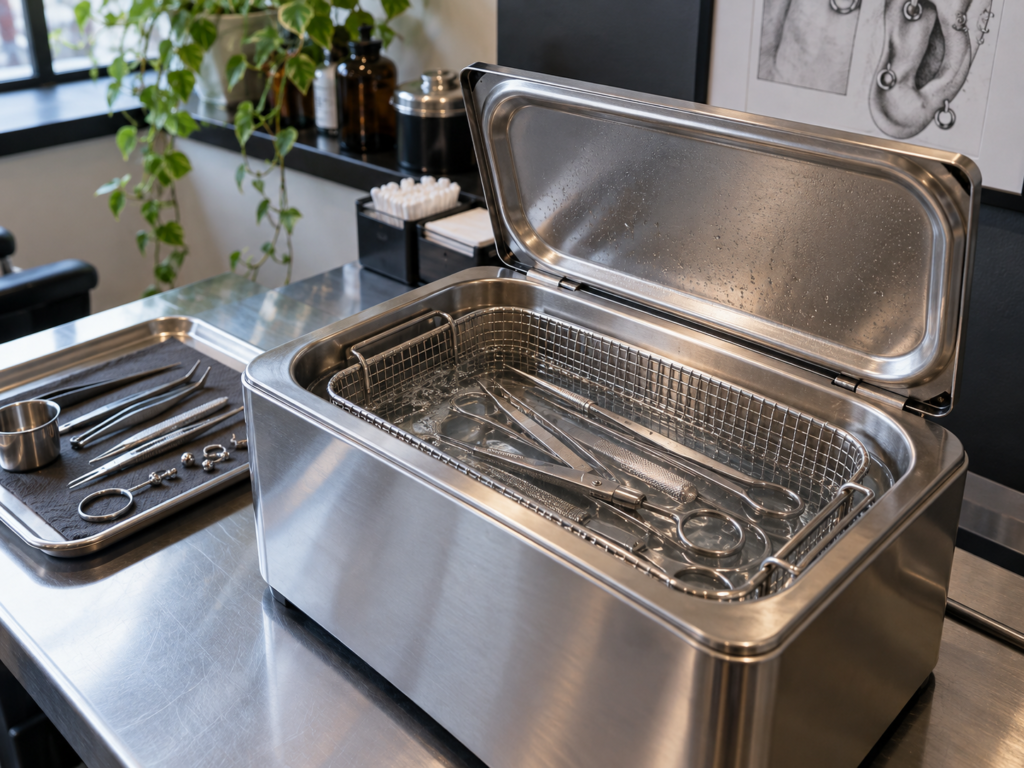
What an ultrasonic cleaner is for
An ultrasonic cleaner is an aid to cleaning: sound waves generate cavitation in the liquid and can help remove residues from surfaces and hard-to-reach areas. It is one stage of reprocessing; it does not replace validated cleaning, any required disinfection or sterilisation.
For reusable instruments used in procedures that penetrate the skin, the cleaner does not complete reprocessing: after thorough cleaning and inspection, follow the IFU for rinsing and drying, then package and sterilise before reuse using a compatible method and in accordance with applicable requirements.
Controlled use and instructions
Follow the IFUs for the cleaner, detergent and instruments. Check compatibility, dilution, temperature and duration as specified; do not exceed the stated fill level and use the designated basket. Start cleaning promptly: dried organic residues are harder to remove and may compromise subsequent steps. If you cannot proceed straight away, keep the instrument moist in accordance with the stated procedure; do not improvise soaking.
Wear the specified PPE, avoid splashes and aerosols, and close the lid when required. Do not immerse incompatible items or electrical components. Keep contaminated instruments separate from clean items.
Process monitoring and maintenance
Inspect under adequate lighting, particularly hinges, grooves and surfaces. If residues remain, repeat cleaning in accordance with the procedure and assess the cause. A dirty bath, an unsuitable load or incorrect parameters may reduce effectiveness.
The used solution may become contaminated: change it and maintain the machine in accordance with the IFUs and studio procedure; do not reuse it beyond what is permitted. Record the required checks. Cavitation tests, where required, do not replace inspection or demonstrate sterility.
Limitations and safety
Ultrasonic cleaning may damage joints, coatings or sensitive materials. Do not immerse an instrument without first checking its compatibility: the manufacturer’s instructions take precedence over informal practice.
The CDC and WHO describe general healthcare reprocessing; they do not, by themselves, define the requirements for every piercing studio in Italy. Check the applicable procedures with the competent authorities.
- The cleaner does not sterilise and does not replace the sterilisation required for the instrument.
- Use only compatible detergents and follow the instructions for the solution and maintenance.
FAQs
- Does the cleaner sterilise? No: cavitation is a cleaning stage.
- Can I treat any instrument? No; always check compatibility and the IFU.
Sources and limitations
Sources consulted on 13 October 2026. These references do not replace IFUs, training or Italian, regional or local requirements. The CDC and WHO provide general principles for cleaning and reprocessing; they do not validate a particular cleaner model, detergent or individual instrument.