

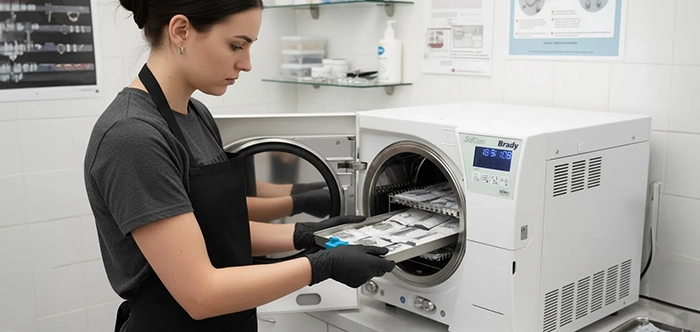
Autoclaves and infection prevention in body piercing
In professional body piercing, infection prevention is fundamental. An autoclave is central to steam sterilisation under pressure, provided that items are properly cleaned, packaged, processed using the specified parameters and monitored through physical, chemical and biological checks. Correct use helps protect clients, practitioners and the studio.
What is an autoclave and how does it work?
An autoclave uses saturated steam under controlled pressure. For instruments compatible with heat and moisture, steam sterilisation is a preferred method when the cycle is validated, monitored and used in accordance with the manufacturer’s instructions. Dry heat and other methods have their own indications and parameters.
Cycles may use temperatures such as 121°C or 132–135°C, but there is no single cycle suitable for every load. The correct programme depends on time, temperature, pressure, steriliser type, packaging, load density and the manufacturer’s instructions. Do not choose a cycle based on temperature alone.
A critical part of the process is effectively removing air from the chamber and packs so that steam can penetrate consistently, particularly in instrument joints, lumens and cavities.
This is important for body-piercing instruments such as forceps, receiving tubes and reusable accessories.
Why pre-cleaning matters
An autoclave cycle cannot be effective if an item has not been cleaned properly. Organic residue, such as blood or secretions, can prevent steam from reaching surfaces and compromise sterilisation.
Follow the instructions for both the instrument and the equipment. The process may include meticulous manual cleaning and, where specified, ultrasonic cleaning, followed by rinsing, thorough drying, inspection and compatible packaging. An autoclave does not replace cleaning.
The correct instrument-processing workflow
For infection-prevention procedures to be effective, items must follow an organised workflow in which each stage depends on the previous one: contaminated → cleaning → inspection → drying → packaging → sterilisation → release (after indicator checks) → appropriate storage → use with aseptic technique.
Treating the autoclave as one part of this workflow, rather than a stand-alone solution, helps reduce errors and standardise practice throughout the studio.
Packaging and monitoring indicators
Package instruments using a system validated and compatible with steam sterilisation, with an adequate seal. Use chemical indicators appropriate to the system and load. The presence and placement of internal or external indicators should follow the system instructions, studio procedures and local requirements.
It is also essential to use biological indicators containing spores of Geobacillus stearothermophilus according to the applicable procedure. The CDC specifies at least weekly testing in its context and testing of every load containing implants; maintenance, repairs, suspect results and local requirements may call for additional checks. Always record the result and any action taken.
After sterilisation, store packs in a designated sterile-storage area, in a dedicated, closed, clean and dry cabinet. Avoid unnecessary handling that could compromise packaging integrity.
Parameters, maintenance and records
Having an autoclave is not enough; it must be operated correctly. Follow the manufacturer’s specified time, temperature and load capacity.
For pre-vacuum autoclaves, perform the Bowie–Dick test on each day of use, before the first load, where required for that equipment type and in accordance with the manufacturer’s instructions. The test assesses air removal and does not replace biological monitoring.
Regular preventive maintenance is essential for the equipment to function correctly. Keep cycle records, including the date, load, observed physical parameters and chemical and biological indicator results.
In the event of a health inspection or adverse event, these records may support traceability and compliance checks, but do not replace health-authority requirements or professional advice.
Reusable instruments, needles and jewellery
Not every item used in body piercing is processed in the same way. Reusable instruments, such as forceps, receiving tubes and re-useable dilators, must go through the complete cleaning, inspection, packaging and autoclave-sterilisation workflow.
In safe professional practice, needles are generally single-use and are discarded after each client in an appropriate sharps container.
Jewellery may arrive pre-sterilised from the manufacturer or be sterilised at the studio, provided that its material, design and components are compatible with the autoclave process. Follow the manufacturer’s recommendations and, where applicable, use sterile items with traceability for the batch and sterilisation cycle.
Jewellery materials that should not be autoclaved
Some jewellery materials cannot withstand pressurised steam cycles and should not be placed in an autoclave because they may deform, crack, lose components or suffer changes to their appearance. Examples include:
- Some biopolymers, plastics and acrylics: do not assume they are compatible with steam; follow the manufacturer’s instructions for use (IFU).
- Natural or synthetic pearls: heat, moisture, pressure and adhesives may damage the item; check the specific product.
- Glued stones, crystals and rhinestones: adhesives may lose their bond during processing.
- Porous organic materials such as wood, bamboo, bone and horn have specific porosity and reprocessing requirements and should not be autoclaved without explicit validation.
For autoclave sterilisation, use quality metal jewellery only when its material, design, finish and coating are compatible with the process and documented by the manufacturer. Do not rely on a metal’s commercial name as the sole evidence of suitability.
Autoclaves and professional credibility
Clients may not understand every technical detail of the process, but they can see when a studio is organised and attentive. Appropriate sterilisation practices demonstrate care and professionalism.
In a market where information is readily available and the public is increasingly aware of health considerations, infection prevention is not a competitive advantage; it is an ethical responsibility.
Investing in a suitable autoclave, maintaining rigorous protocols and recording processes helps protect people and strengthen a practitioner’s reputation.
Frequently asked questions about autoclaves in body piercing
Does the autoclave replace instrument cleaning?
No. The autoclave sterilises items that have already been cleaned and dried properly. Organic residue may prevent steam from reaching surfaces and compromise the process, so cleaning is a required step before sterilisation.
Can I sterilise any piece of jewellery in an autoclave?
Not always. Not all materials are designed to withstand autoclave cycles. Follow the manufacturer’s instructions and choose jewellery suitable for pressurised steam sterilisation, or supplied sterile with traceability.
Can a dry-heat oven replace an autoclave?
Dry heat is another sterilisation method, with its own parameters and validation requirements. For metal instruments used in body piercing, steam autoclaves are widely used; the complete process must still be properly validated, monitored and recorded.
How long does a sterilised package remain sterile?
The storage period for a sterilised item depends on service policies, packaging type and storage conditions (a closed, clean and dry place, with the package undamaged). More important than a fixed number of days is maintaining package integrity, traceability and good storage practice.
Conclusion
An autoclave is central to infection prevention in body piercing, but it can only do its job as part of a complete workflow that includes cleaning, inspection, packaging, sterilisation, storage and aseptic use.
Using suitable equipment and correct parameters, together with physical, chemical and biological monitoring, consistent records and up-to-date good practice, helps protect clients and staff and supports the studio’s credibility with health authorities and the wider market.
Sources and limitations
Steam sterilisation must use a cycle validated for the steriliser model, load, packaging and manufacturer’s instructions. This guide is for information only and does not replace instructions for use, professional training or local health-authority requirements.
- CDC — Steam Sterilisation — principles, parameters, Bowie–Dick testing, and physical, chemical and biological monitoring
- CDC — Summary Recommendations — cleaning, packaging and sterilisation monitoring
- WHO — Decontamination and reprocessing — principles for reprocessing reusable devices
- ANSI/AAMI ST79 — steam-sterilisation practices in healthcare facilities; check the applicable edition and local requirements
Sources consulted on 27 September 2026. If instructions conflict, follow the device’s instructions for use and applicable health regulations.