
What is cross-contamination?
It is the unintended transfer of microorganisms or contaminating material between people, objects or surfaces. In piercing, this can happen even when no blood is visible: hands, gloves, phones and surfaces can link separate areas.
An effective protocol combines hand hygiene, appropriate barriers, cleaning and disinfection, instrument management and separation of workflows.
Common recurring mistakes
Touching a phone, pen, lamp, drawers or handles with gloves intended for the procedure, then returning to the working field, transfers contaminants. The same applies to placing a used instrument on a clean surface.
The outside of a package is not necessarily sterile: the intact barrier protects the contents. A package that was already open before use, is wet or damaged, or non-aseptic contact with the contents or sterile inner surface is a concern. Other critical points include transporting used instruments without a suitable container, keeping clean materials near the sink, and improperly reusing single-use barriers.
Organisational barriers
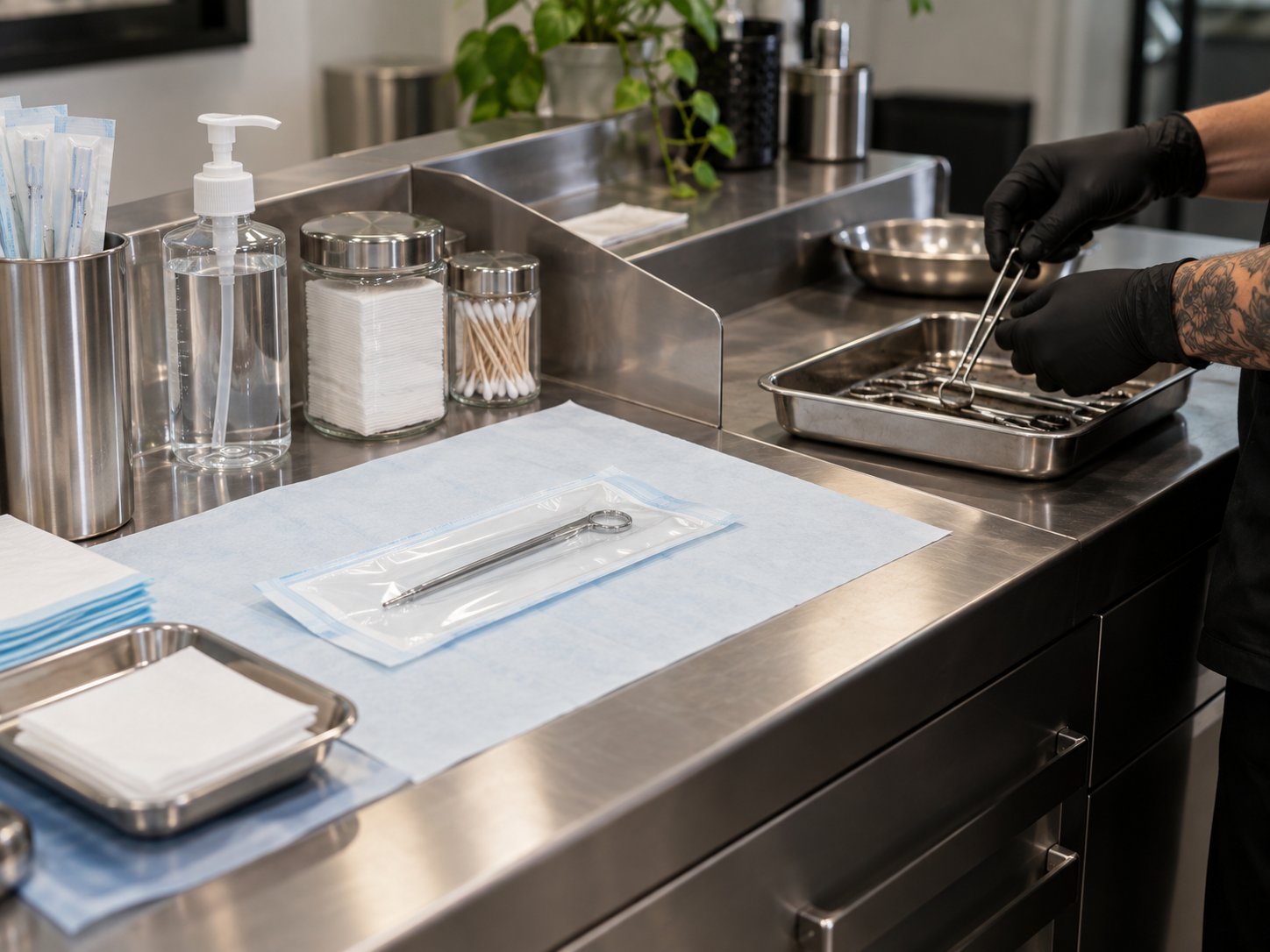
Prepare the required materials before the procedure, keep items on the work surface to a minimum, and clearly distinguish the clean area, sterile field and used-material area. Keep a separate route for contaminated instruments, and open packages without touching the contents or sterile surface.
If gloves required for a clean stage touch a phone, handle or other unclean object, stop, remove them, perform hand hygiene and put on clean or sterile gloves as appropriate for the stage before continuing. Gloves do not replace hand hygiene. Clean and disinfect surfaces and equipment according to the label, including compatibility, directions for use and contact time; covers do not replace the required treatment.
If you suspect contamination
- Stop the stage and set the item involved aside: do not use it on the client or return it to the clean field.
- If the package was already open before use, is wet or damaged, or its sterile contents were touched non-aseptically, do not use the item: replace it with an intact sterile one. If reusable, return it to the full reprocessing pathway specified in the instructions; superficial disinfection is not enough.
- Remove contaminated gloves, perform hand hygiene and replace affected barriers. Clean and disinfect contaminated surfaces in accordance with the product instructions and contact time.
- Restore the clean field before continuing. Follow the studio procedure and applicable requirements for recording or managing the event.
Quick questions
- Does contamination require visible blood? No: transfer can also occur through hands, gloves, objects or surfaces.
- Is protective film enough? No: it does not replace the required cleaning and disinfection.
- Does changing gloves fix every mistake? No: hand hygiene and appropriate treatment of the objects or surfaces involved are also needed.
Sources and limitations
These sources describe general infection-prevention and control principles in healthcare; they are not a specific standard for every piercing studio and do not replace manufacturer instructions, training or local requirements. Products, PPE and obligations should be checked against labels/IFUs and applicable rules.
- CDC — Core Infection Prevention and Control Practices: hand hygiene, standard precautions and glove use.
- CDC — Cleaning: cleaning before disinfection and sterilisation.
- CDC — Recommendations for Disinfection and Sterilization in Healthcare Facilities: reprocessing and the distinction between disinfection and sterilisation.
- WHO — Decontamination and reprocessing of medical devices for health-care facilities: principles of device reprocessing.