
The short answer
There is no general ban on exercising after getting a piercing. During healing, however, it is sensible to avoid movements and situations that knock, pull or irritate the piercing. The piercing’s location and type of training affect how much it is disturbed.
Assess each exercise by what happens around the piercing: if the jewellery is pressed, rubbed or could catch, modify the movement or choose a different activity. If training does not involve the piercing or increase discomfort, you can return cautiously. This does not show that the channel has healed or replace individual advice.
Sweat and caring for the area
Sweating during exercise is compatible with healing, but it can leave the skin damp or increase discomfort if wet clothing rubs against the piercing. After training, shower as usual; if needed, gently rinse the area and pat it dry with a clean product, without rubbing or handling the jewellery.
Do not turn rinsing into aggressive or repeated cleaning. Follow the care instructions you were given for your piercing and ask for advice if a routine causes irritation.
There is no universal amount of sweat, maximum workout duration or washing frequency that applies to every site and person.
Friction, pressure and contact sports
Repeated pressure, friction and knocks can irritate a healing piercing. Before exercising, consider how equipment and clothing move in relation to the piercing: a belt or waistband may press on the navel; a helmet or headphones may touch the ear and cartilage; straps and mats may affect the shoulder, collarbone or face.
If a movement causes pressure or friction, replace it with a variation that leaves the area clear or postpone that exercise. In collision sports, martial arts and activities with a risk of snagging, consider whether knocks and pulling can genuinely be avoided. Protective gear does not make a direct impact safe; ask your piercer about protection suited to the site.
Shared equipment
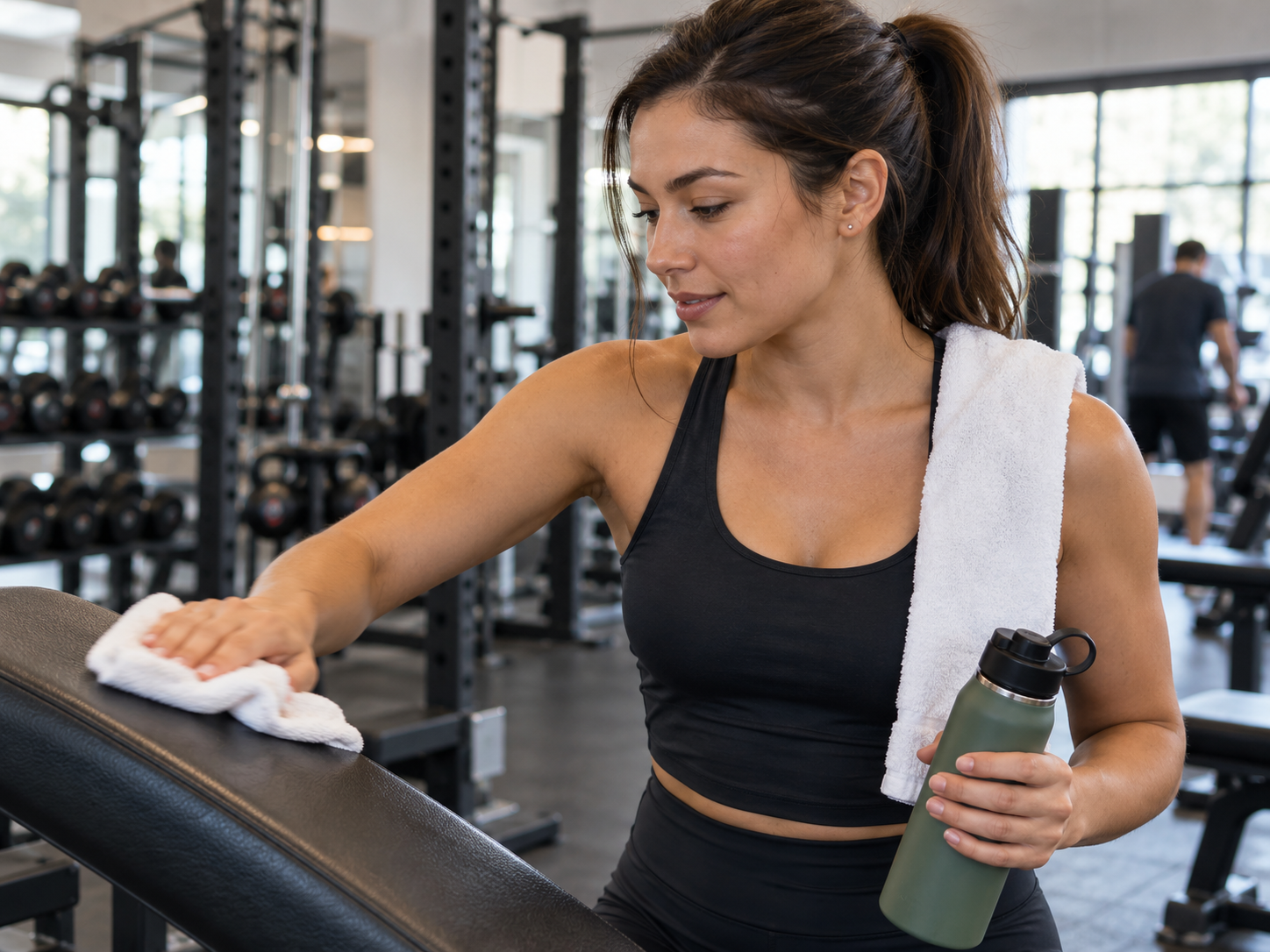
Benches, machines and mats are surfaces used by many people. Avoid direct contact between the piercing and these surfaces: where practical, use a clean towel as a barrier without rubbing it over the piercing. Clean equipment according to the gym’s usual rules.
- Wear clean clothing that does not compress or rub against the jewellery; change very wet clothing as soon as you can.
- Wash your hands before touching the area.
- Do not rotate, push or remove the jewellery in order to exercise.
- If the area comes into contact with a dirty surface, follow the gentle care advice for the piercing; avoid harsh products or improvised remedies.
How to adapt your workout
There is no single timeframe for returning to every exercise: healing times vary by site and person. Even a piercing that looks settled on the surface may not be fully healed.
- Start with an activity that does not involve the area: avoid pressure, friction, pulling and the risk of knocks.
- Pay attention to how it responds: if pain, irritation or swelling increases after an exercise, stop that movement and ask for advice about the piercing.
- Postpone any activity you cannot adapt: for contact sports or exercises that put direct load on the site, ask your piercer how to protect the area; if symptoms of a possible infection appear, seek healthcare advice.
Do not replace or remove the jewellery just to do an exercise without first seeking appropriate advice.
When to seek help
A new piercing may be tender, but if it becomes painful or pus appears, there could be an infection. These signs alone are not enough to make a diagnosis: contact a doctor or healthcare service for an assessment. Your piercer can help with questions about friction, placement or jewellery; for health symptoms, contact a healthcare professional.
Frequently asked questions
Can I work out on the day I get pierced?
There is no universal ban based on the day. The area may be tender: choose only movements that do not press on it, rub it or expose it to knocks. Follow the individual advice you were given for the site and procedure.
Does sweat infect a piercing?
Sweating does not automatically mean that a piercing will become infected. During healing, avoid activities that irritate or knock the area and limit direct contact with shared surfaces.
Do I need to wait until it has fully healed before lifting weights?
Not necessarily: it depends on the exercise and the piercing’s location. Avoid equipment and movements that press or rub against it; there is no single timeframe for everyone.
Can I remove the jewellery for a contact sport?
Do not remove it yourself just to exercise. Ask your piercer first; if you have pain or pus, contact a doctor rather than trying to diagnose it yourself.
How long should I wait before returning to my usual training?
It is not possible to give a reliable timeframe without considering the site, healing and type of sport. Comfort and the absence of trauma help assess the activity, but do not prove that the piercing has fully healed.
Conclusion
In many cases, it is possible to exercise during healing as long as the activity does not expose the piercing to pressure, friction, snagging or knocks. There is no deadline that applies to everyone: adapt movements to the site, continue gentle aftercare, and seek healthcare advice if the piercing becomes painful or pus appears.
Sources and limitations
This guide is for information and does not make diagnoses. The sources consulted do not establish a universal waiting period for every sport and piercing; the practical adjustments described above are not clinical prescriptions.
- Association of Professional Piercers (APP) — Suggested Aftercare for Body Piercings: physical activity and sweating during healing; avoiding activities that aggravate a piercing and protecting it from contact with shared equipment and mats. Page consulted on 14 October 2026; no update date is stated.
- healthdirect Australia — Body piercings and tattoos: healing times vary by site; pain or pus are reasons to seek medical assessment. Last reviewed: December 2024; consulted on 14 October 2026.
Recommendations may vary according to individual circumstances. If you have a clinical concern, contact a healthcare professional.