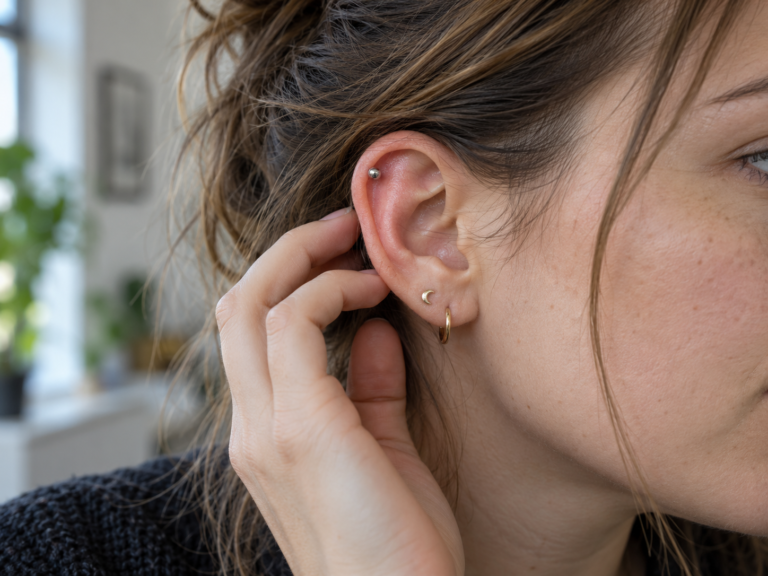
Discharge does not automatically mean infection
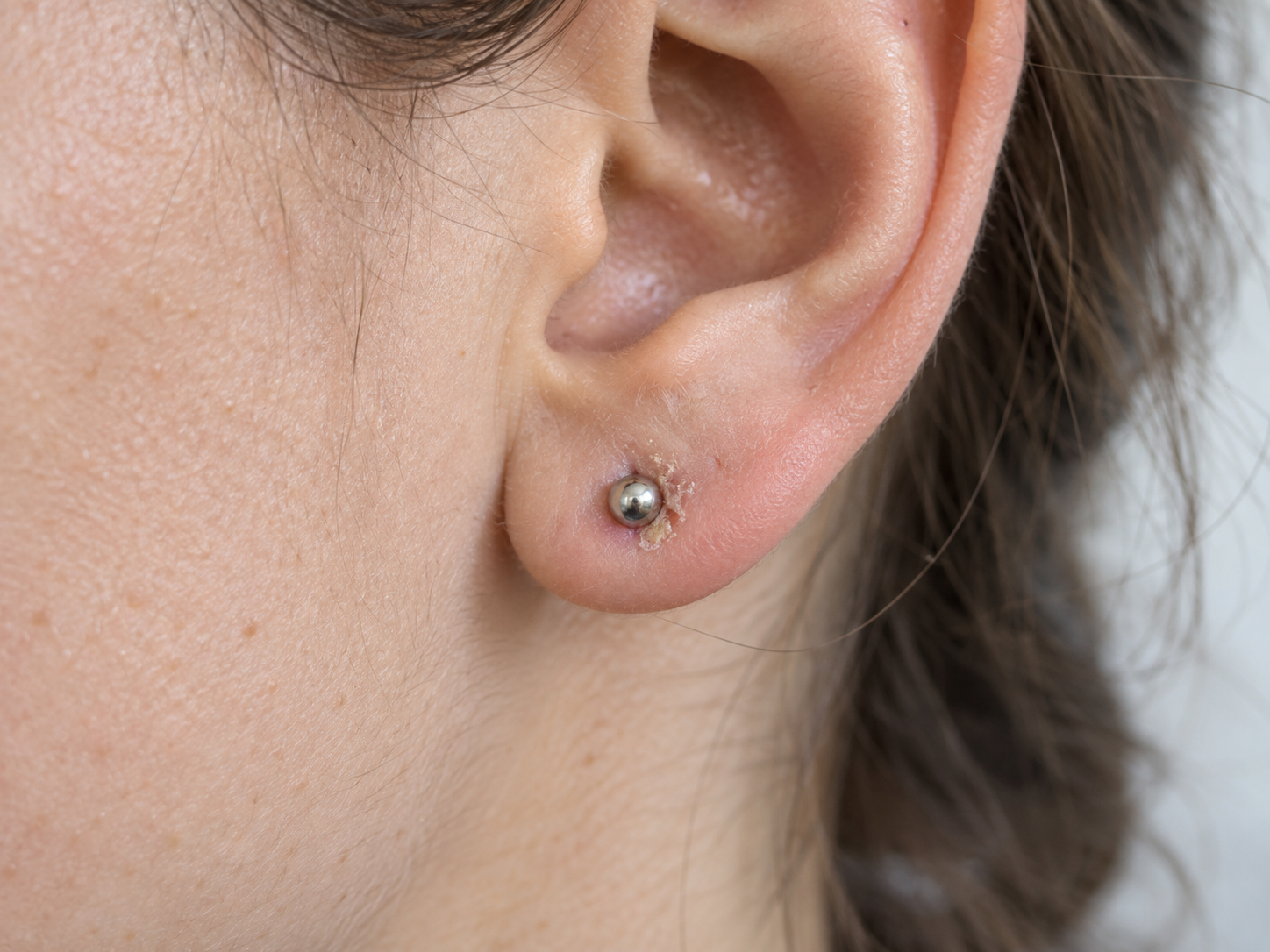
During healing, finding a little dried fluid on the jewellery or near the piercing may be worrying. A small amount of clear or pale discharge that dries to form a little crust can appear in the first few weeks; on its own, it is not enough to conclude that there is an infection.
Consider the overall picture, not a single detail seen in the mirror. This guide provides general information: it does not replace a consultation and cannot diagnose the cause of a symptom. If you have questions about an individual piercing, ask a qualified piercer for advice; if warning signs appear or you are unsure, contact a healthcare professional.
What can discharge during healing look like?
In the first few weeks, pale fluid may appear and leave a crust or small deposits on the jewellery as it dries. Whitish or pale yellow discharge has also been described during healing. Its appearance and amount vary from person to person.
When it appears and how long it lasts can vary depending on the piercing site, the person and the stage of healing. A piercing may look healed on the outside before the process is complete, so do not take a temporary improvement in appearance as proof that healing is finished.
A thin, localised crust without worsening pain or redness and without feeling generally unwell may be consistent with normal healing. This does not provide a diagnosis: if the situation changes, persists or worries you, seek an assessment.
Colour alone cannot determine whether there is an infection
Pale, whitish or light-yellow discharge may occur during healing; colour alone cannot establish its cause. Pus can also vary in colour. Consider the symptoms as a whole and how they develop, rather than judging by a single shade.
Pus-like discharge, especially if accompanied by worsening or other symptoms, is a reason to seek medical advice. Explain when it began, whether it is increasing and what other symptoms are present.
Which changes need closer attention?
Seek medical assessment if your symptoms worsen or you notice one or more of these signs:
- marked or increasing pain, swelling or local warmth;
- intense redness or a noticeable change in the skin around the piercing;
- pus or blood coming from the piercing;
- fever, chills or a general feeling of being unwell.
If you feel very unwell, seek medical care promptly. A healthcare professional can assess the site, how symptoms are progressing and whether treatment may be needed: do not try to determine the cause yourself or use antibiotics or medicated products without advice.
How to manage crusting without irritating the piercing
Follow the aftercare instructions you were given for your piercing. In general, wash your hands before touching the area; gently rinse with sterile saline wound wash, as directed, and pat dry with gauze or another clean, single-use product. You do not need to rotate the jewellery to clean it: handling it may irritate the area.
- let any deposits soften while rinsing; do not pull or scratch them off;
- do not squeeze the piercing or try to force fluid out by applying pressure;
- avoid touching, moving or rotating the jewellery to check the area;
- do not clean more often or more vigorously in an attempt to “dry out” the discharge.
If the area is particularly irritated or the instructions you received do not seem appropriate, contact your piercer to clarify your aftercare. For marked pain, warmth, swelling, pus, fever or worsening symptoms, contact a healthcare professional instead.
Should I remove the jewellery if I suspect an infection?
Do not remove it automatically: if you suspect an infection, leave the jewellery in place unless a doctor tells you to remove it. If the jewellery is tight or appears to be embedding in the skin, seek medical care without delaying assessment and do not force it out.
Frequently asked questions about crusting and discharge
Does a pale crust mean the piercing is infected?
No, not necessarily. Pale discharge that dries into a crust can occur during healing. Monitor how it develops and any other symptoms: colour alone cannot diagnose an infection.
Can I remove the crust to check more closely?
It is best not to scratch or pull it off. Gently soften any deposits while rinsing and pat dry, without squeezing or handling the piercing.
When should I contact a doctor?
Seek an assessment if you develop marked pain or swelling, warmth, intense redness, pus, bleeding, fever, chills or feel unwell, or if the situation worsens or worries you. If you suspect an infection, do not automatically remove the jewellery: follow medical advice.
In brief
A small amount of clear or pale discharge that dries into a crust may be part of healing, but appearance varies and cannot reliably distinguish normal healing from a problem on its own. Avoid squeezing or handling the piercing, pay attention to how it develops and to associated symptoms, and seek medical assessment if it worsens or warning signs appear. Do not automatically remove the jewellery without medical advice.
Sources and limitations
These sources support the general information on healing, aftercare and signs that warrant assessment. They do not replace an individual assessment.
- NHS — Infected piercings: pale fluid and crusting in the first few weeks; signs of possible infection and advice not to remove jewellery unless advised by a doctor. The page states “last reviewed: 18 April 2023” and “next review due: 18 April 2026”; the scheduled review date has passed.
- Association of Professional Piercers — Aftercare: whitish-yellow discharge and crusting during healing; sterile saline wound wash, drying with single-use products and no need to rotate jewellery during cleaning. The page is dated 3 May 2020.
Consulted on 14 October 2026. These are general information sources, not guidance specific to the Italian healthcare system, nor diagnosis or treatment. If symptoms are significant or worsening, contact a healthcare professional.