

The difference between internal threading, external threading and push pin
When choosing piercing jewellery, the fastening system is a technical detail that can affect comfort, safety and even the jewellery’s service life. The most common systems include internal threading, external threading and push pin.
Although they may look similar, each system works differently, which can affect the wearer’s experience. Understanding the differences helps inform jewellery choices for both new piercings and healed piercings.
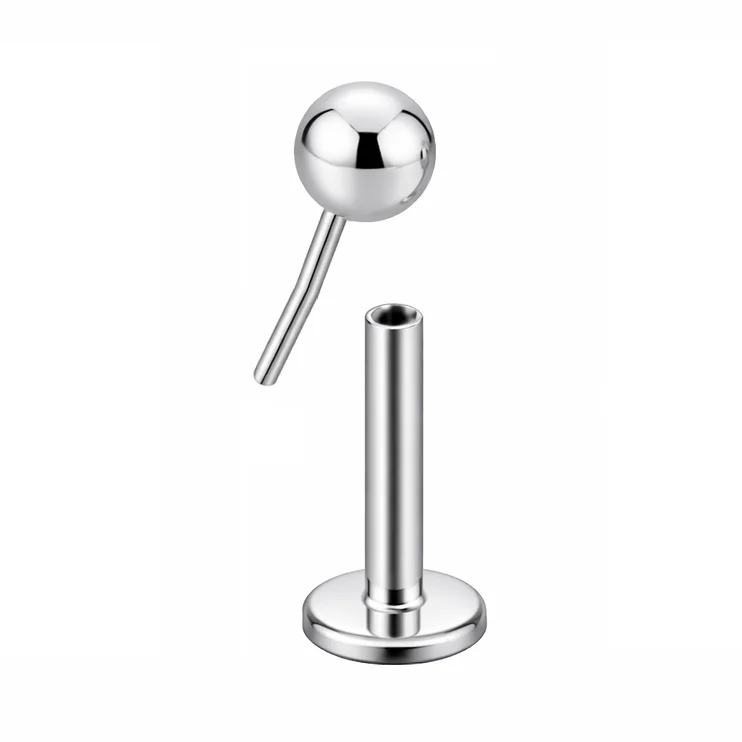
Push Pin
The push-pin system, also known as threadless or press-fit jewellery, is a modern option designed for convenience and versatility. The post is hollow, and the decorative end has a slightly curved pin that presses into it without being screwed in.
A threadless system makes it possible to change the decorative end without necessarily replacing the post, and no thread passes through the tissue. Retention still depends on the design, workmanship and pin adjustment. Follow the manufacturer’s instructions or ask a piercer to adjust it: excessive bending can damage the pin or reduce its hold.
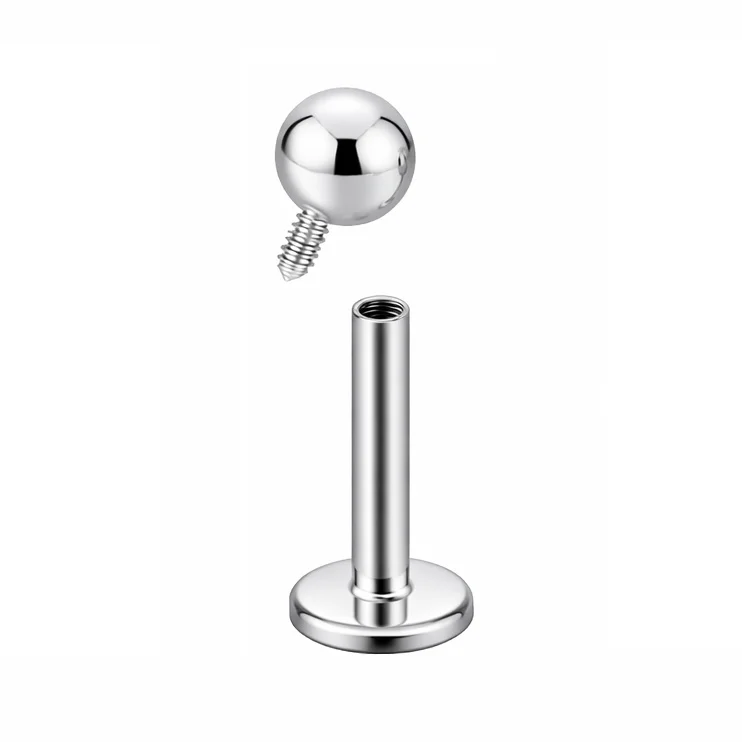
Internally threaded
The Association of Professional Piercers (APP) includes internally threaded jewellery in its initial-jewellery standards because, when the jewellery also meets the requirements for material, finish, size and design, the part passing through the tissue remains smooth. This addresses a specific mechanical risk; it does not make every piece automatically safe.
This design can reduce friction as jewellery is inserted, which may make insertion gentler, particularly in a recent or sensitive piercing. Internally threaded systems are also commonly used in implant-grade titanium jewellery. The fastening alone does not establish safety: material, finish, dimensions, design and the individual piece must all be assessed.
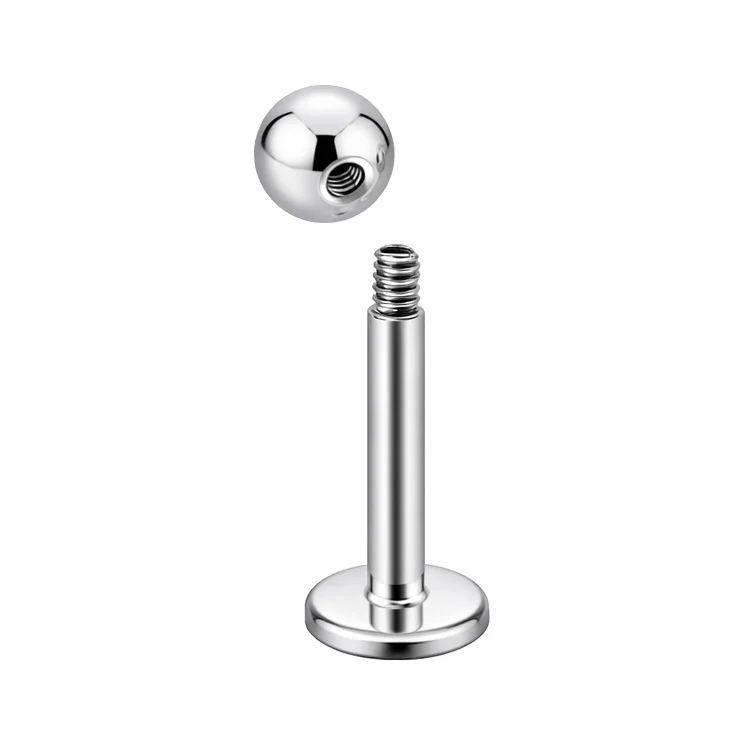
Externally threaded
External threading is the more traditional and widely recognised design. The thread is on the outside of the piercing post, and the decorative end or ball screws onto it.
Because it is simpler to manufacture, externally threaded jewellery is available in a range of materials and price points. However, the exposed thread may increase friction during insertion and pass through tissue. For this reason it is not included in the APP’s initial-jewellery standard. That does not mean it is obsolete for every use in a healed piercing; selection should still be cautious.
Sources and limitations
The choice of fastening system depends on anatomy, size, finish, workmanship and the retention of the individual piece. No system is automatically safe by name alone. A piercer should check assembly and adjustment, or the manufacturer’s instructions should be followed.
- Association of Professional Piercers — Jewellery for Initial Piercings — internal threading, threadless jewellery, external threading and finish
- NeoMetal — Guide to Threadless Jewellery — how threadless jewellery works and is maintained
- NeoMetal — Pin Bending Guide — pin adjustment according to the manufacturer’s system
Sources consulted on 27 September 2026. Do not force or modify a pin without guidance from the manufacturer or a piercer.