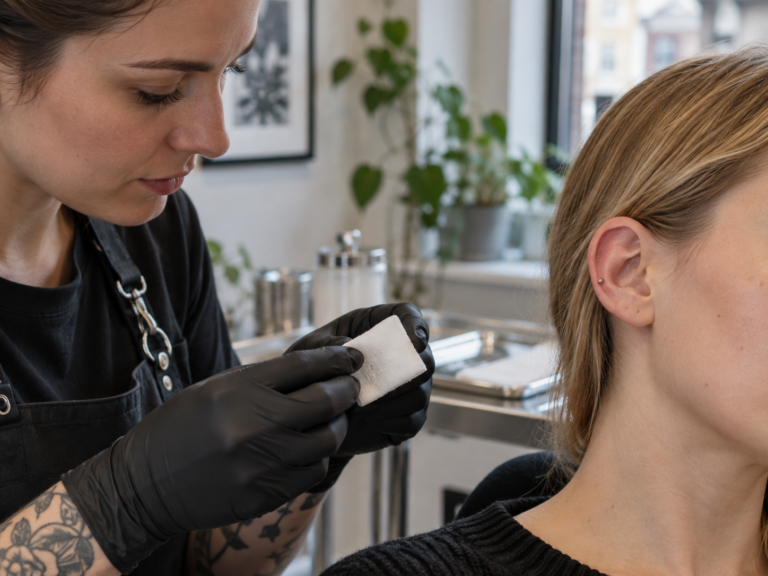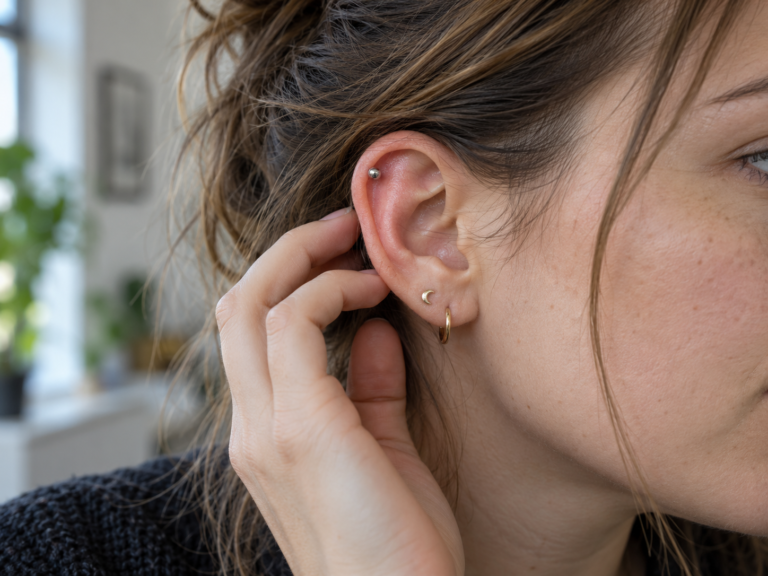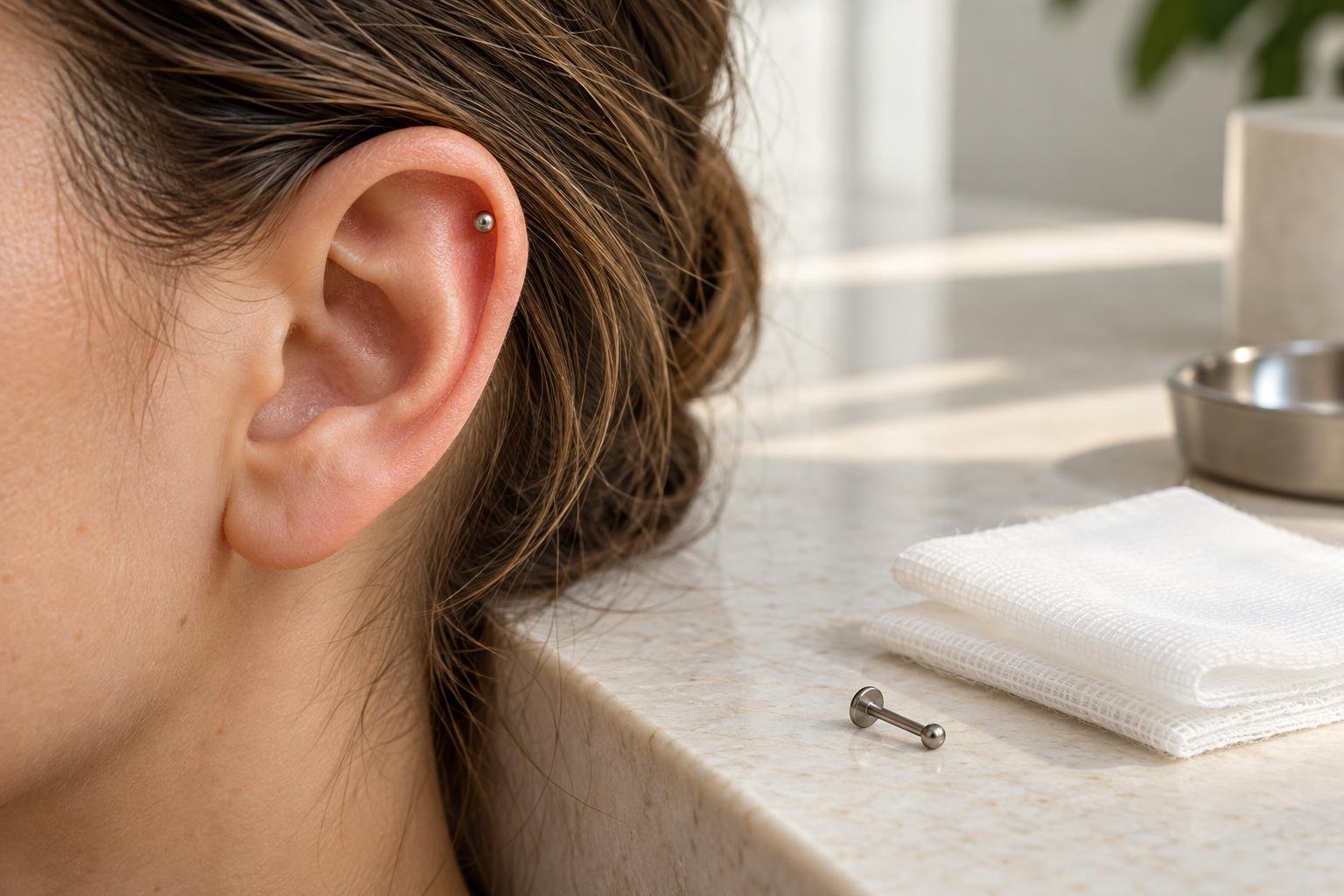
Redness, swelling, pain and discharge can occur for various reasons while a piercing heals. Irritation, sensitivity to a product or material, and infection cannot always be distinguished by appearance: signs may overlap, and a photograph is not enough to establish the cause. The studio’s aim is not to diagnose, but to recognise when it is prudent to refer someone to a healthcare professional and to reduce further trauma.
What you can observe—and what you cannot conclude
In the early stages there may be local tenderness, some swelling and a small amount of clear or pale fluid that forms crusts. On their own, these signs neither confirm nor rule out infection. The colour or smell of discharge, a “bump” or the course of symptoms are not diagnostic tests either.
It is useful to ask when the problem began, whether it is improving or worsening, which products have been used, whether the jewellery was knocked or changed, and whether there are any general symptoms. Gathering this information can help when communicating with a doctor; it does not replace their assessment or authorise a remote diagnosis.
Warning signs
Recommend prompt medical assessment if the area becomes increasingly swollen, painful or hot; if redness spreads or the skin changes markedly in appearance; if there is copious or pus-like discharge; or if the person has a fever, chills or feels very unwell. There is no need to wait for every sign to appear: rapid deterioration or significant illness calls for urgent assessment.
When the ear cartilage is involved
A very painful, red and swollen outer ear after cartilage piercing needs urgent medical assessment, preferably the same day. Infections at this site can involve bacteria such as Pseudomonas aeruginosa and, if complicated, damage the cartilage and leave permanent deformity. Do not wait for the problem to “go away on its own” or try to treat it in the studio.
The piercer’s role: observe, document and refer
- Listen without blame and make a brief note of the timeline, reported changes, products used and jewellery details.
- Explain clearly that irritation and infection can look similar and that a piercer cannot confirm the cause or prescribe medicines.
- Refer to a doctor or healthcare service if there are warning signs; do so urgently for significant cartilage pain and swelling.
- Avoid squeezing, probing or manipulating the area. Do not recommend antibiotic or steroid creams, or other medicines, without advice from a healthcare professional.
If the person has already applied a product or taken a medicine, ask them to tell the healthcare professional. Do not suggest stopping or changing a prescribed treatment: that decision belongs to the clinician responsible for their care.
Possible irritants
Friction, repeated pressure, knocks, excessive jewellery movement, a size or style poorly suited to the anatomy, harsh products and over-cleaning can irritate a piercing or make healing more difficult. A reaction to a material or product is also possible, but itching or redness alone cannot distinguish it from other causes.
When there are no signs requiring medical assessment, the piercer can help identify mechanical factors and explain how to avoid friction and unnecessary handling. There is no universal week for shortening jewellery: timing and size depend on the placement, anatomy and course of the swelling. If infection, embedded jewellery or significant compression is suspected, medical advice takes priority over an independent jewellery change in the studio.
Communicating with clients without diagnosing
When the client is worried
“I understand that this may be worrying. I can’t tell from a photo or a single sign whether it is irritation or infection. I’ll ask a few questions to understand how it is changing and, if there are signs that need attention, I’ll recommend that you see a doctor.”
When they mention a product or cream
“Thank you for telling me what you used; that is useful information to share with the healthcare professional. I can’t tell you which medicine to use or change a treatment. I can help you reduce knocks and check the jewellery when appropriate, but first let’s consider whether you need to see a doctor.”
When cartilage or severe symptoms are involved
“The swelling and pain you describe, especially in this area, need urgent medical assessment. I can’t diagnose this in the studio. Don’t remove or change the jewellery yourself: ask the healthcare professional what to do, and tell them if it feels tight or seems embedded.”
If infection is suspected, do not advise the person to remove the jewellery themselves. The healthcare guidance consulted recommends leaving it in place unless a clinician advises otherwise; the healthcare professional can assess whether it should stay, be changed or be removed in that particular case. This does not mean the jewellery is a treatment or guarantees drainage.
Materials and nickel: a legal limit is not a diagnosis
For posts intended to be inserted into pierced parts of the body, the European Union’s REACH Regulation sets a nickel release limit of less than 0.2 μg/cm²/week. This is a requirement concerning nickel release, not a guarantee that everyone will tolerate every piece of jewellery or that infection cannot occur. If sensitivity is suspected, irritation persists or there are questions about the material, document what is known and suggest speaking to a healthcare professional; do not attribute the cause solely to how the skin looks.
Sources
Guidance consulted on 14 October 2026. Clinical and professional sources inform this article, but do not replace medical assessment or applicable local regulations.
- UK Health Security Agency — Pseudomonas aeruginosa perichondritis associated with ear piercings (risks and urgency for ear cartilage; UK guidance).
- Association of Professional Piercers — Troubleshooting: Body Piercing Troubleshooting for You and Your Healthcare Professional (common problems, signs that warrant medical advice and caution about jewellery removal).
- Association of Professional Piercers — Suggested Aftercare for Body Piercings (irritation from trauma, harsh products and over-cleaning).
- European Union — REACH Regulation (EC) No 1907/2006, Annex XVII, Entry 27 (nickel release limits).
- European Commission — Communication 2023/C 1604, harmonised standards for test method EN 1811:2023.
Informational content for communication in the studio; not a diagnostic or treatment tool.